Deck Staining Word of the Day: Flashing
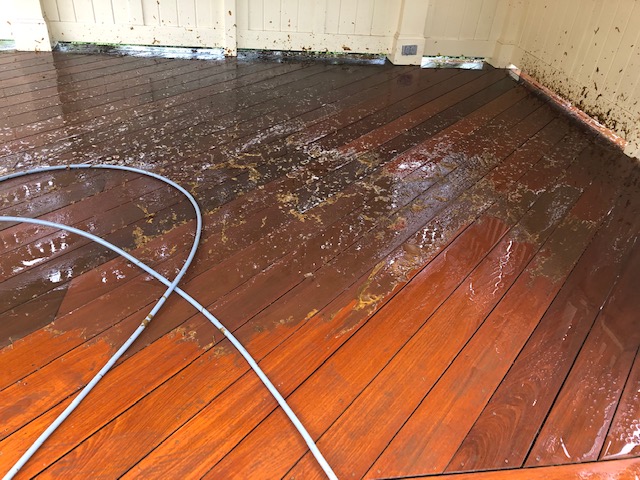
Definition: Flashing is shiny spots on a deck after it has been stained. This contrasted with dull areas will make for an uneven appearance.
What Causes Flashing?
2 causes. Either too much stain being applied or the stain being applied on top of an existing stain. Semi transparent, transparent and semi solid stains are considered penetrating finishes which means a stain will penetrate the natural wood to protect the wood better, longer. What happens in both causes mentioned above is that there is an existing coat of stain on the deck, when a new coat of stain is applied, it has nowhere to go so it sits on top of the deck and dries which causes the oils to reflect the light and cause uneven shiny spots contrasted with dull spots on a deck
How to Resolve Problem:
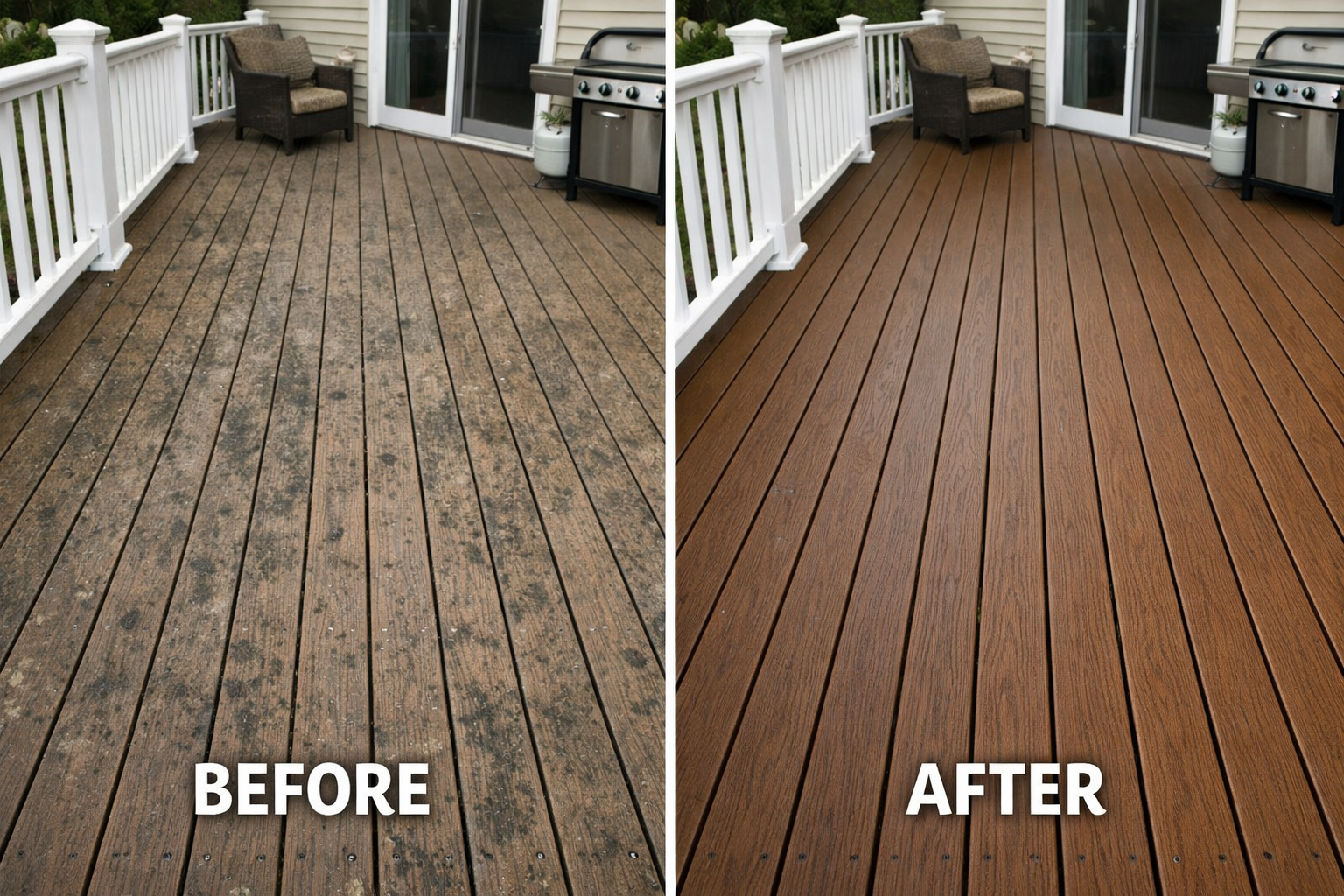
There are three ways to resolve such a problem 1) chemically strip a deck removing all previous seals and stains. This leaves for a clean canvas to work with. 2) Sanding down all top surfaces of the deck. 3) If there are only a few small areas of flashing a medium grade of steel wool is helpful in removing the excess stain and restoring the finish to blend in with the other parts on the deck.
Possible Pitfalls and options to consider:
• Sanding will not be effective remedy if the stain is very thick and fresh.
• The advantage of the sanding is that the deck will be smooth protecting the big and little fee that may use the deck.
• Experience has taught me that it is better to strip a deck first rather than sand it to remove the flashing (and also the stain) When you do this remove the stain from the entire board (do not strip the areas with flashing only).
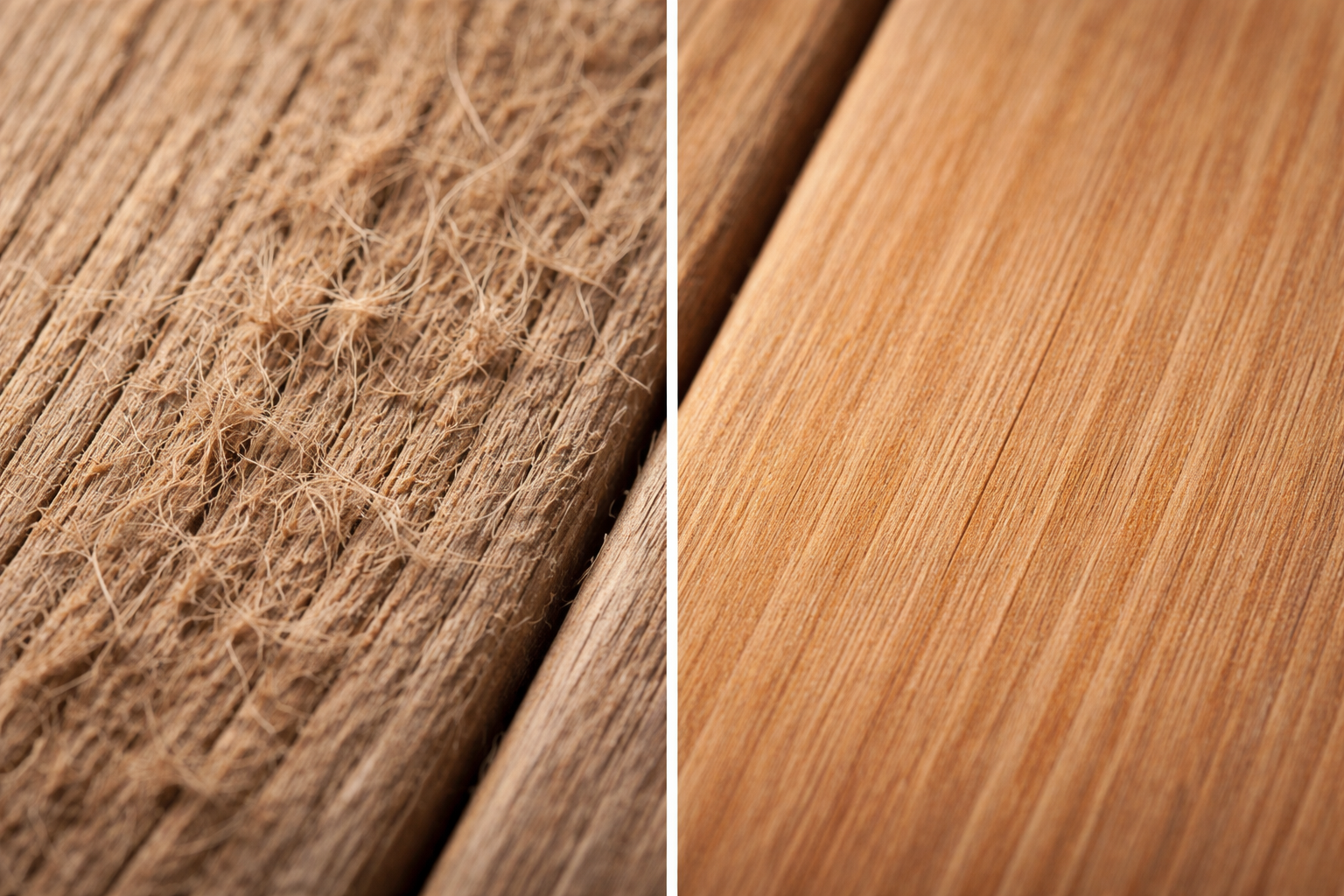
• On newer decks stripping may cause furring (read about furring in another posting) where small particles of the wood pull away from the deck. This is not necessarily bad but covered over with stain may cause another imperfection in the final appearance of the project. So in many cases when stripping is performed so is light sanding to the area with no greater than 80 sand paper using a palm sander.
Do all decks that have previous treatment need to be stripped or sanded prior to a new stain to avoid flashing?
Generally No, with that being said if there is an old colored stain you may run the chance of flashing. Darker, newer stains may be more obvious cases for flashing. But lighter stains may be deceiving until a fresh coat of stain has been applied. Generally a trained eye can tell but really you never know
Where does flashing mostly commonly occur? Along the bottom of the railings where it meets the deck. This is caused by spraying the rails with overspray on the floor then spraying the floor. The combination of applying two coats quickly may result in flashing. How do you resolve this from happening? Back brushing the stain in these areas. This may also be where there is greater buildup from previous treatments. The other areas commonly seen flashing is near the edge of the house that gets frequent cover from the house. The old stain may not have been warn as much or may not have received frequent weathering. The most common location is under table, grill a mat or under furniture. Each of these areas gets little to no wear, sun or exposure to the elements so they are preserved and so are any previous treatments. To a deck owner looking at their deck after it is stained they may be alarmed by these dull or shiny spots on the deck, but once the furniture is placed back it the spot where it normally resides, they will never see them.
Will Flashing adversely affect the lifespan of my deck? No, flashing results from too much protection
Can flashing be unsafe? Generally No, however excessive flashing can be because it is like an oil slick on your deck. Read the labels on the product you are applying for amount of coverage and give adequate drying time after stain has been applied (24-48 hours). In damp/ humid climates or shaded decks may be longer.
Tags: Deck Stain, Flashing, Shiny spots on deck

nice site
Always thought that your blog is one of the best in my bookmarks, and once again saw this