Frequently Asked Questions:
What are the differences in composite decks?
Listed on this website are the pros and cons of different composite deck materials (virgin vinyl, PVC and coupling vinyl with wood). The writer of this article has a bias, never the less his information is helpful
http://www.gardenstructure.com/composite_decking
Our Trex Lawsuit mitigation experience
As a result of this lawsuit Trex hired Environmental Solutions Association to mitigate those who suffered loss as a result of the Trex product. Environmental Solutions Association (ESA) is the nation’s premier, membership-based training organization. ESA is a major provider of educational courses, both classroom and distance learning, for the Inside Air Quality issues of Radon, Mold, VOC’s, Allergens and Bacteria.
Elite was hired by Environmental Solutions because of our vast experience and great emphasis in reducing mold and mildew and our precise application of the very sensitive product that restores the vibrancy and beauty of an older Trex deck.
How do you clean composite decks?
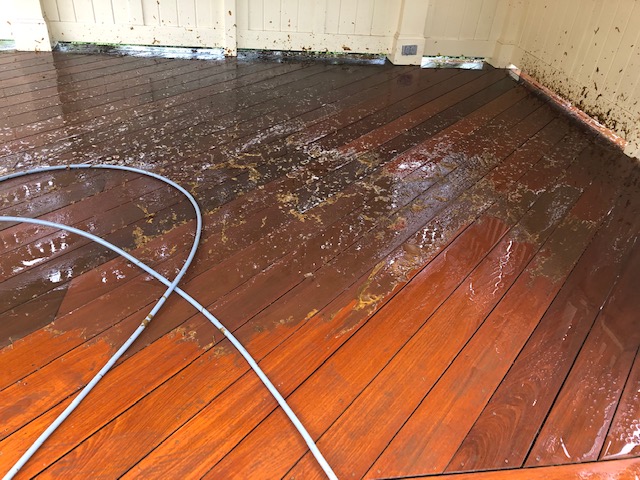
We use a mild detergent in our lower pressure system this will remove mold and mildew without cutting or marring the surface of a composite deck, like high pressure will. Because composite decks are made of different materials (PVC, Wood, Plastic) each surface will react differently to spills, mold mildew and staining. For this reason we cannot, guarantee the removal of every stain but rest assured that if it can be cleaned (safely) we will make every effort to do so.
Do you seal composite decks?
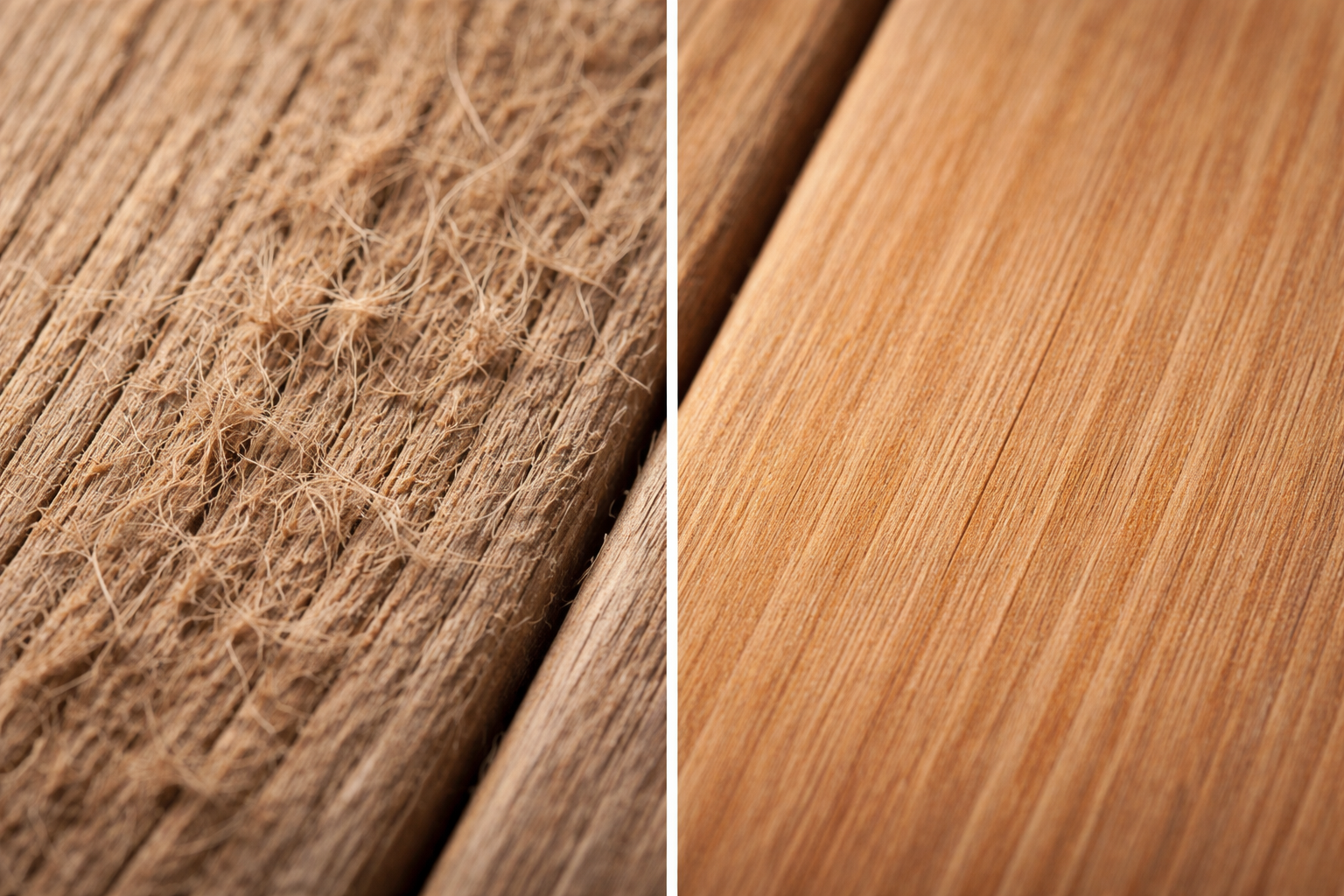
Before manufacturers created smaller spindle pieces for railings, we found the floor to be composite and the railings were wooden with a Trex handrail. In working with Trex and other research we found that sealing a composite deck was beneficial to composite decks because they were made with wood particles. In fact, not sealing them would cause the composite to degrade and become brittle. Sealing both the Trex and the wood is also less expensive because the floor will not need to be tarped off.
Some customers have expressed concern about this service because it sold as maintenance free but after referring them to the Trex lawsuit as well as telling them about our mitigation experience they decided to have their composite sealed.
Do you stain composite wood?
Many of the older composite materials had poor UV protection and have faded dramatically over time. For over 4 years we have stained composite decks that have succumbed to the sun. Staining these decks has breathed life back and restored their original luster. Additionally, each Trex material had a name specific to its color; the people working with Trex to mitigate the lawsuit have created colors that match precisely the original color of the Trex deck. With that being said, newer composite materials that have higher UV protection and are not prone to the same symptoms of fading and brittleness of earlier manufactured composite materials do not require sealing or staining.
Composite Deck Maintenance Plan
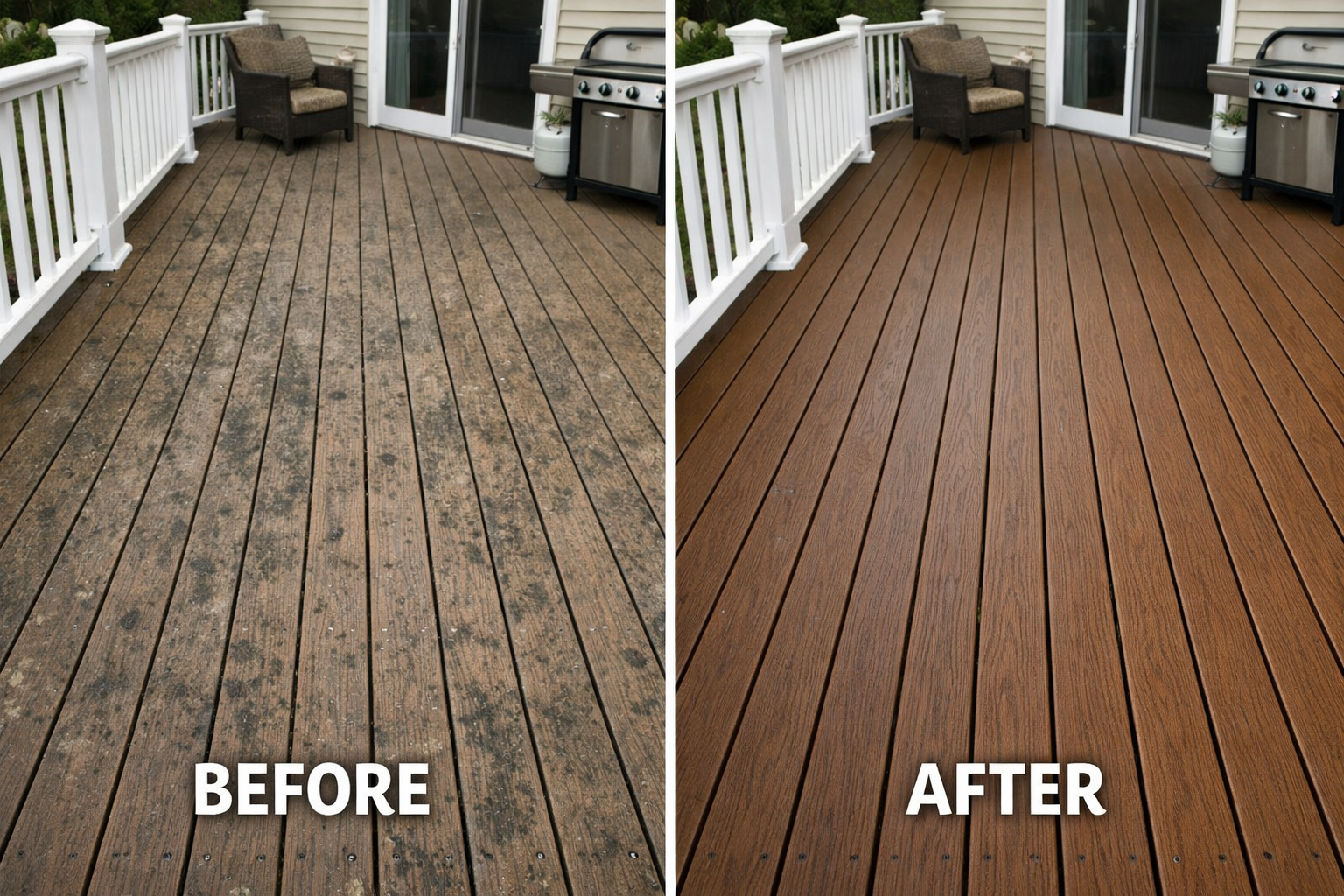
Many composite products are apt to attract mold and mildew growth. This growth on many of the composite colors becomes an eyesore. Many of our customers have asked us to set them up on a maintenance plan where we come out several times per year to clean their deck. This ensures that their deck is always looking its best and is a great savings versus a once a year visit.
What are the black marks that appear on my Trex Deck?
Technical Information
Mold
• Download Mold Technical Bulletin (pdf, 27K)
Mold is a lower form of plant life that can settle and grow on any surface, including Trex® decking. Mildew is a form of mold that grows on damp surfaces.
Mold spores are similar to seeds, but cannot be seen until colonies form. Air currents, insects, animals and water transport the spores easily. Due to mold’s adaptability and large number of species, it is very hard to control and impossible to totally eliminate. Mold will not affect the structural performance of Trex decking.
In order to form visible colonies, mold needs food, moisture, and temperatures between 40 and 90° F. Trex decking is not a food source for mold, but can collect food in the form of dirt and debris such as the overflow from flowerpots and gutters. Trex decking can also supply moisture if the gaps between deck boards are too small or clogged
Should I use bleach to clean my composite deck?
Chlorine Bleach or Sodium Hypochlorite (active ingredient in Chlorine Bleach) based deck cleaners that the uneducated recommend may appear to quickly remove mildew (white in color) and mold (black and other colors) fungus from Trex and other Composite Decking. Nothing could be farther from the truth.
The Environmental Protection Agency (EPA) and the Occupational Safety & Health Administration (OSHA) DO NOT RECOMMEND Chlorine Bleach for Mold (Mildew is a species of Mold) remediation on porous surfaces such as Trex and other composite decking.
The reason for this is that Chlorine Bleach does not remove or kill the roots (mycelium) of the fungus, but actually waters them. A few weeks after you have cleaned a deck with chlorine bleach or sodium hypochlorite based products you will notice the mildew or other mold fungus growing back in greater numbers, especially after additional moisture comes into contact with the deck. It will make the problem worse and harder to remove the next time the composite surface becomes unsightly.
In addition, Chlorine Bleach products reeks havoc on the rest of the deck structure shortening the life of the entire structure. It is highly corrosive to any metal including structural connectors or fasteners (screws) holding the deck together. It shortens the life of the pressure treated lumber supporting the deck. This could lead to liability issues for the owner of the property and any company who recommends its use.
The Trex Lawsuit
NEW JERSEY, June 2 /PRNewswire/ — On May 28, 2004, the Superior Court of New Jersey certified a nationwide class action in a case originally filed in 2000 against Trex Company, Inc. (NYSE: TWP - News) and ExxonMobil Corp. (NYSE: XOM -News; collectively, the “Company”). The case alleges that the TREX product is defective.
The Court certified a nationwide class of consumers spanning the twelve- year period from 1992 through 2004 on a claim that the warranty issued by Trex and ExxonMobil in conjunction with the sale and distribution of composite lumber products is unconscionable and must be reformed. In addition, a class of New Jersey consumers will be certified for the same twelve-year period on claims that the sale, marketing and distribution of allegedly defective Trex lumber products (and its predecessor product Timbrex) violated the New Jersey Consumer Fraud Act and breached express and implied warranties. Damages under the New Jersey Consumer Fraud Act are trebled as a matter of law. In connection with the nationwide reformation of warranty claim, the Court observed that “[t]his issue has already been argued before the Appellate Division in this case and their decision is controlling.”
The complaint alleges that the Trex and Timbrex products rot splinter and degrade as a result of inherent defects in the manufacturing process. The defects are allegedly inconsistent with claims in the marketing materials distributed by the Company. In addition, although the Company claims that the product does not need sealants, after the product exhibits mold, the Company allegedly recommends that consumers apply sealants. Plaintiffs also seek to reform the Company’s warranty to, inter alia, include costs of repair and replacement of allegedly defective product, cover costs of sealants and eliminate the exclusive remedy of providing replacement product.